Flux Suite
2025
Improved retention with an actionable dashboard for businesses
Role
Lead product Designer
Associate Product Design
Team
1x Product Owner
2x Engineers
UX Researcher
Impact
Faster financial decisions for small businesses
Helped product team validate product-market fit
Actionable dashboard improved client retention
Fewer support tickets after launch
Problem area
Small teams, big data confusion
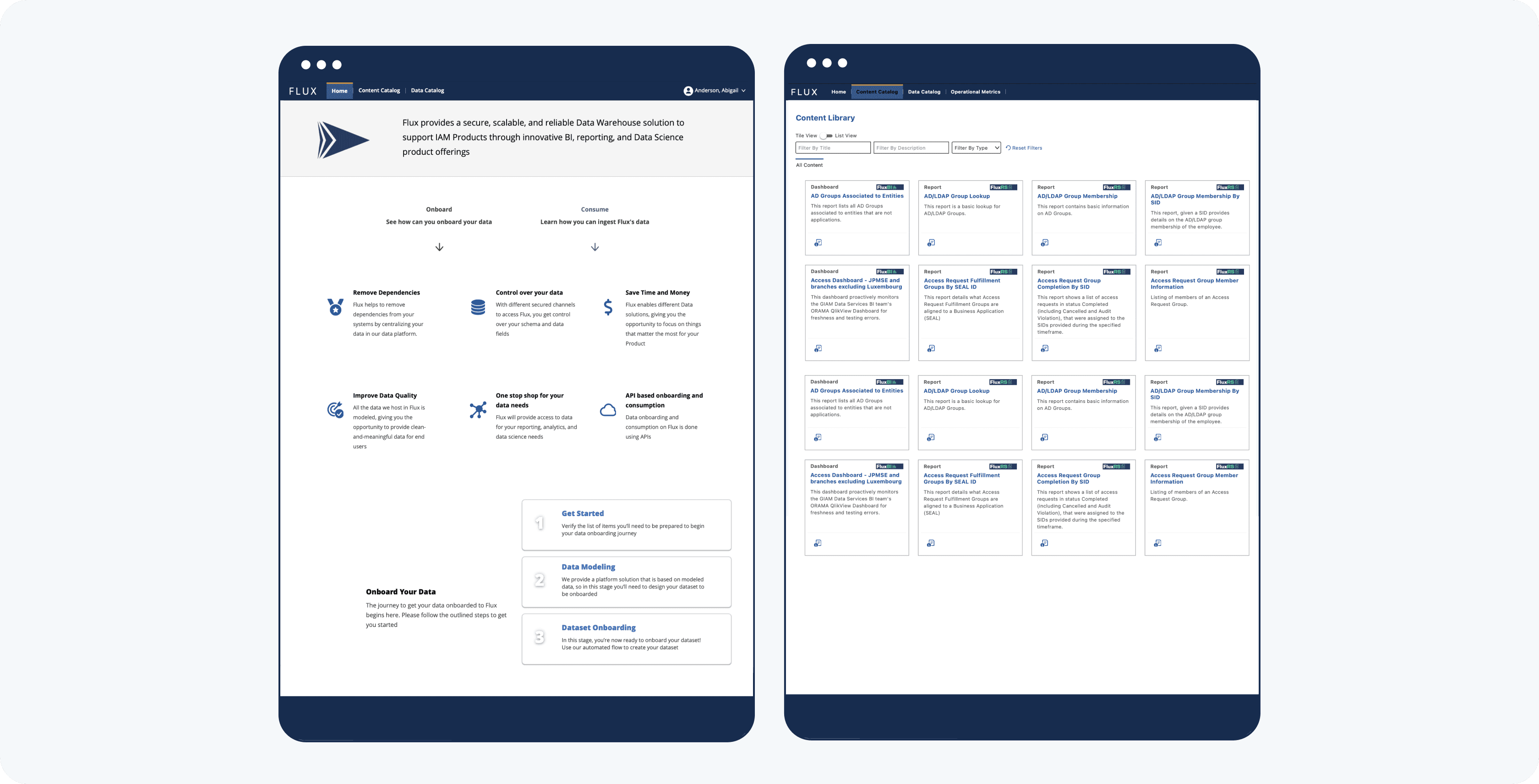
Analysts didn't know where to start. Six products, dozens of outdated Confluence pages, and no clear guidance on which tool did what. They'd search, guess, ask a colleague, submit a ticket — and often still end up in the wrong place. The time lost wasn't just inefficiency. It eroded trust in the platform itself.
Product before redesign
Design goals
What I aimed to achieve
Simplify discovery
Establish clear pathways from data discovery to insight generation. Finding the data they need was the number one issue for users.
Acclelerate access
Eliminate the time constraints on dataset and reports. Make it easy for users to get the data that they need by personalizing their experience.
Empower users
Allow users to generate reports, modify and update reports and explore the Flux Suite platform that Flux Suite has to offer.
Research
Card sorting, Interviews, Surveys and Personas
With so much data and functionality to understand we worked with users, to help us understand their needs. Research highlighted users top pain points and critical insights that would help shape design decisions.
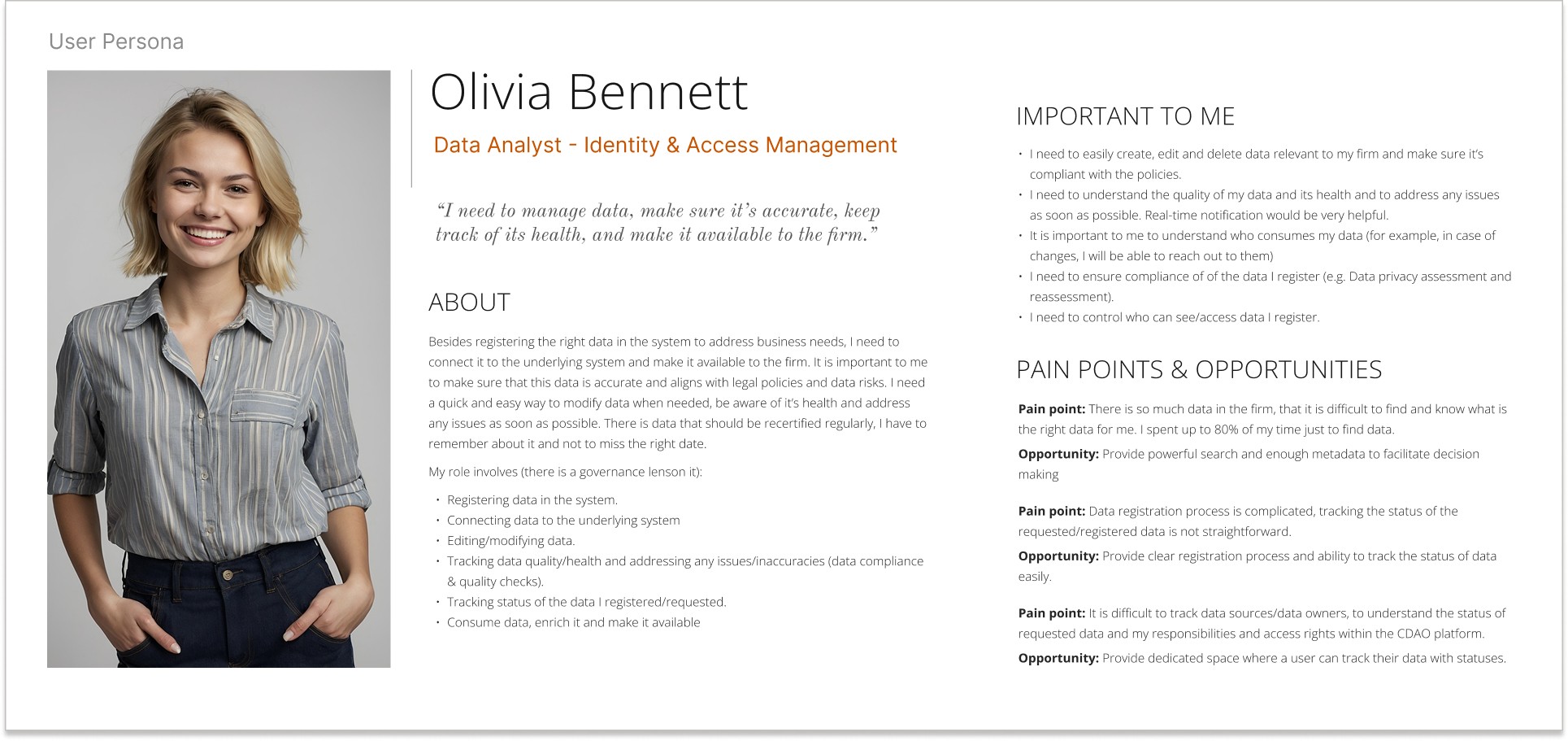
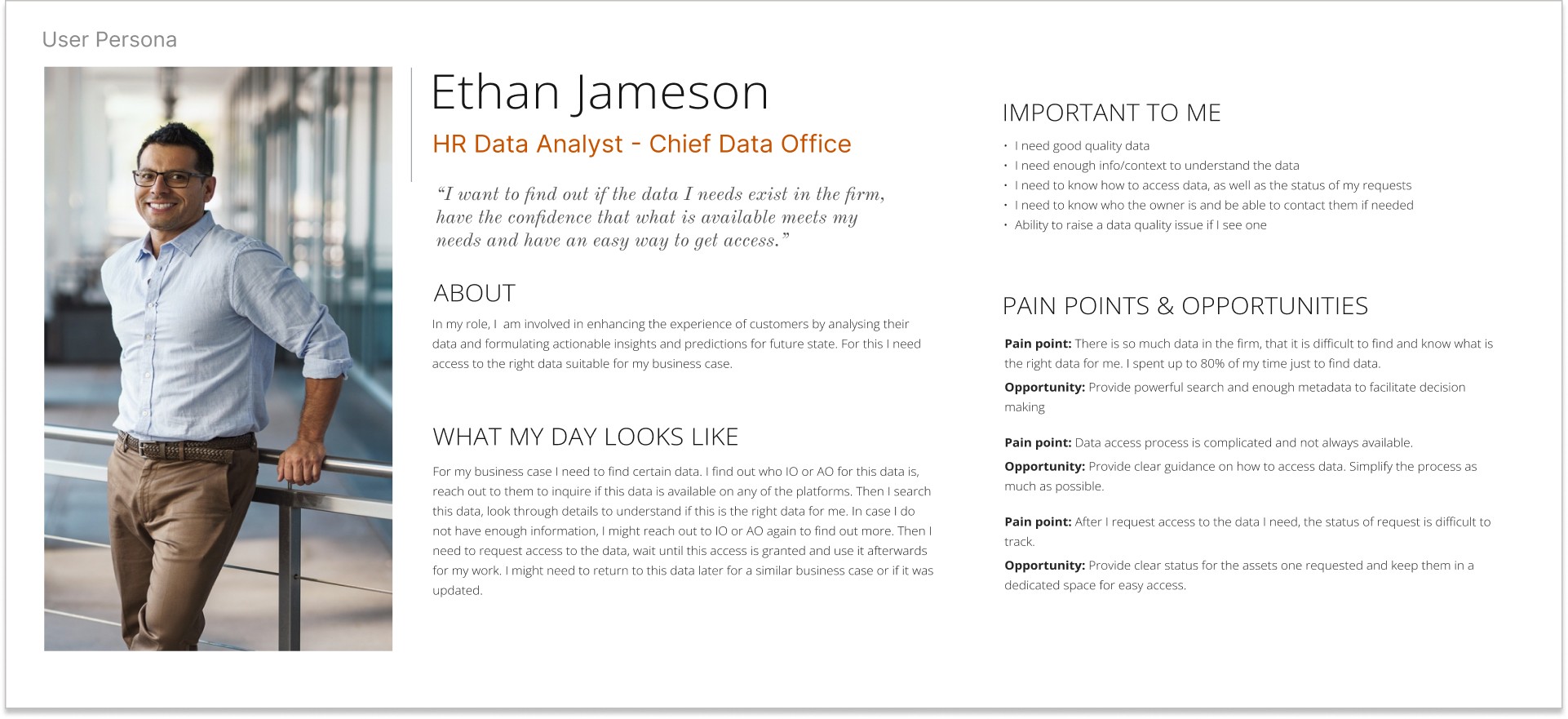
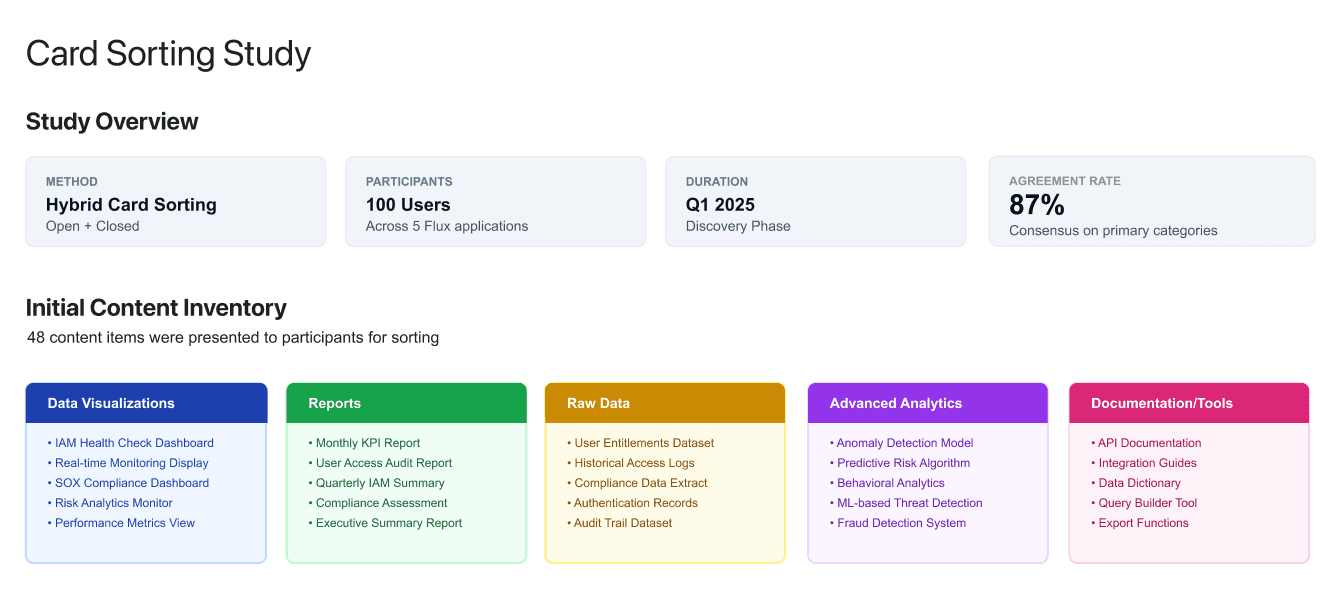
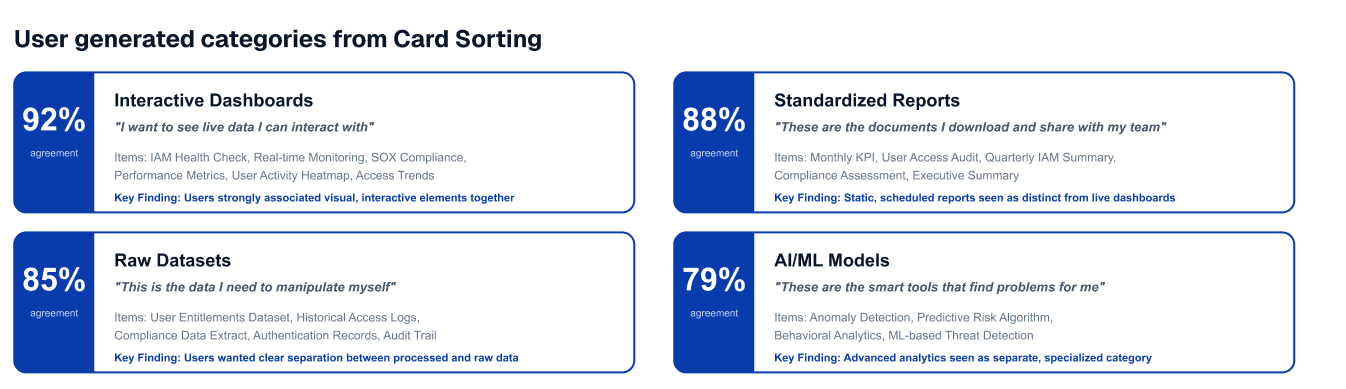
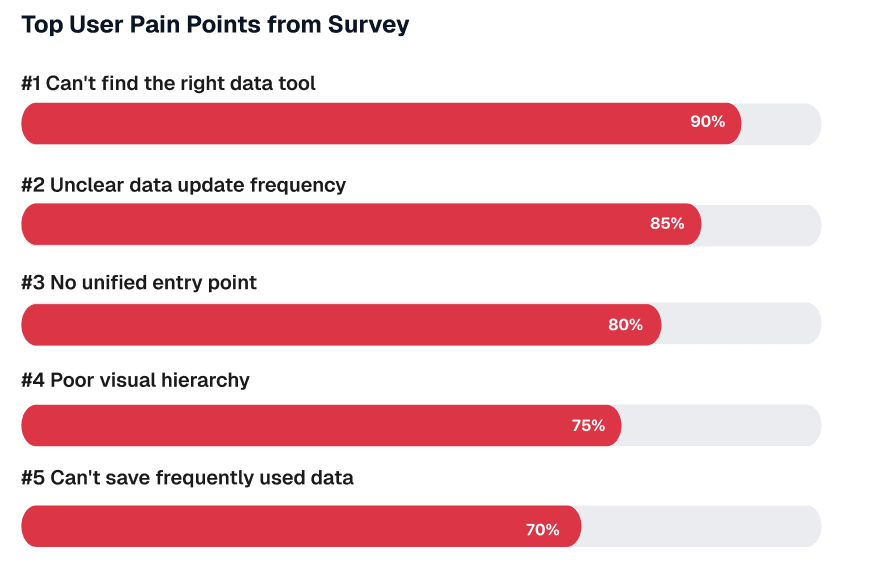
Top research findings
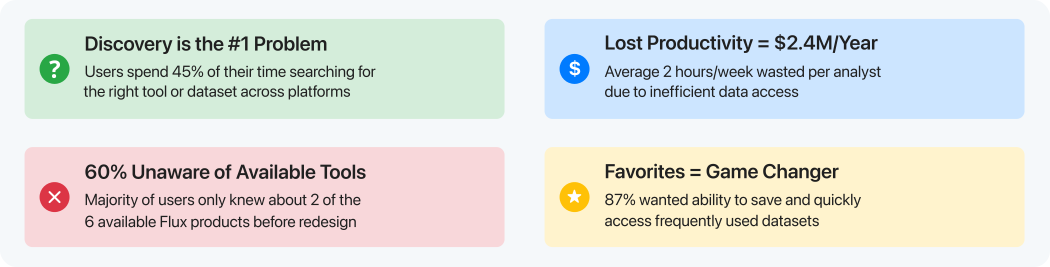
Research results
Mapping the journey
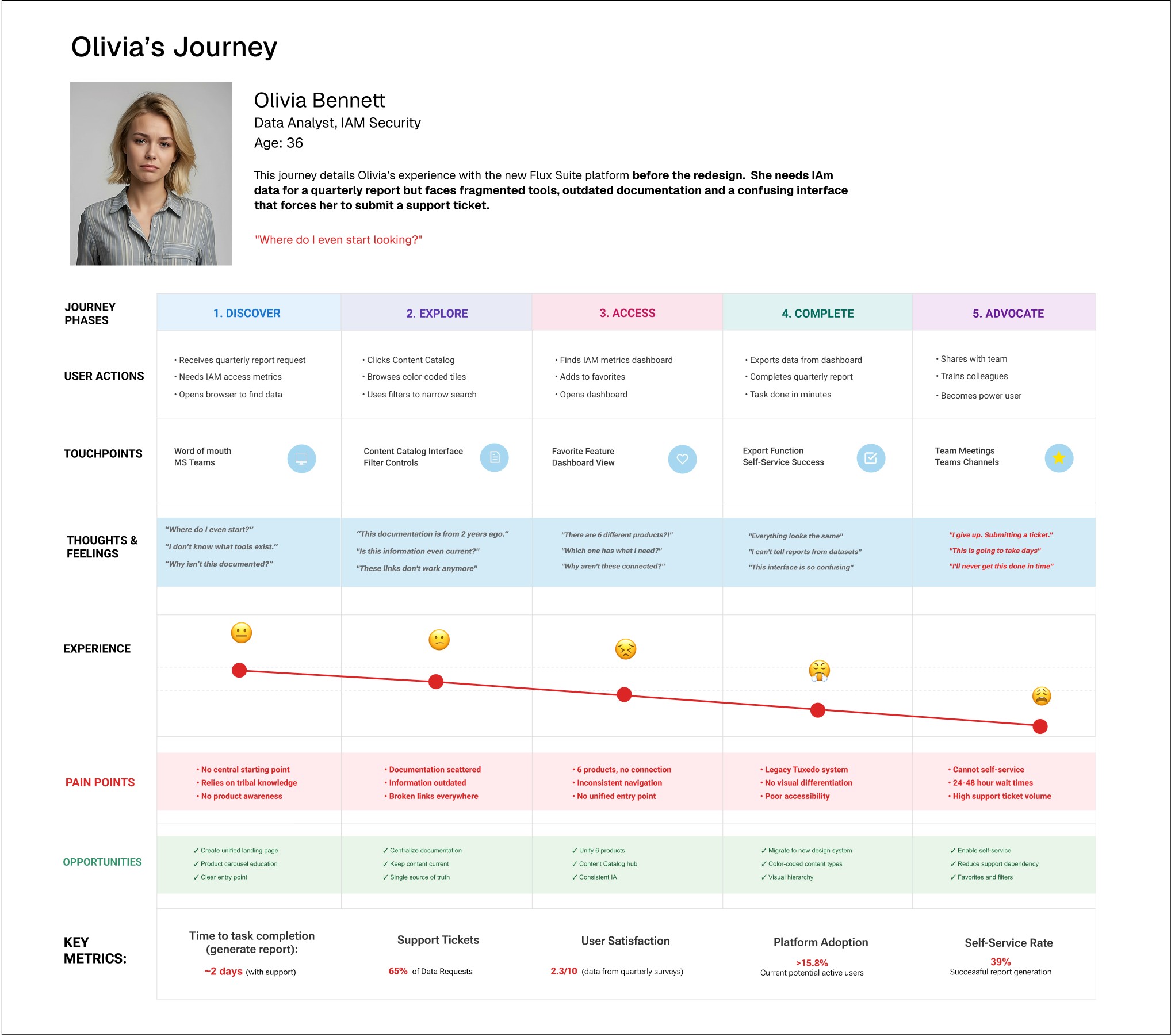
We discovered a very fragmented experience in analyzing the user journey before the redesign.
When the user needs data for analysis, it's unclear where to start looking.
The user searches multiple Confluence pages, but information is scattered and outdated.
The old interface is not able to tell the user what data types there are.
When the user contacts the help desk for support they have to wait 24-48 hours for a response.
Design decisions
Choosing clarity over complexity
I explored two directions: a chart-rich layout and a minimalist one. I went for simplicity because financial data needs precision and quick scanning. The clean layout made key insights easier to understand and improved trust in the tool, especially important at a time when customers were resigning and product retention was decreasing.
A simple interface, easy to navigate
Clear product names, no confusing datasets
Dual view modes, lists and tiles
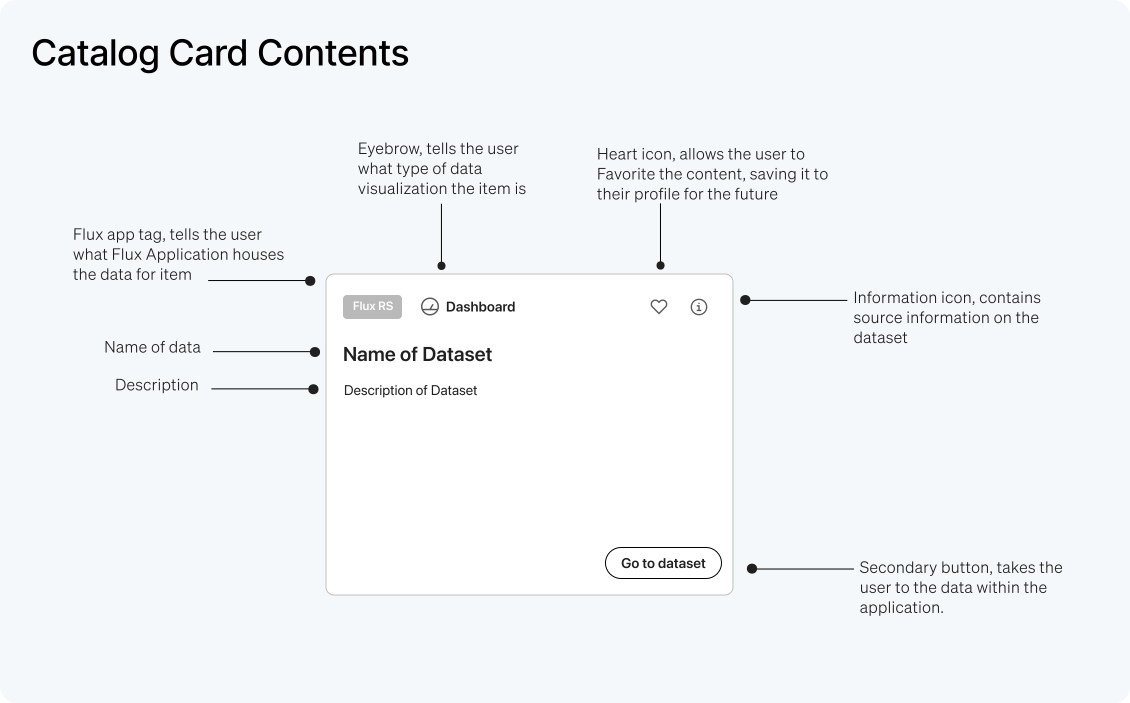
Favorites features for findability
Color codes content types
Robust search options with AI integration
Iterating
Designing for confidence, not data literacy
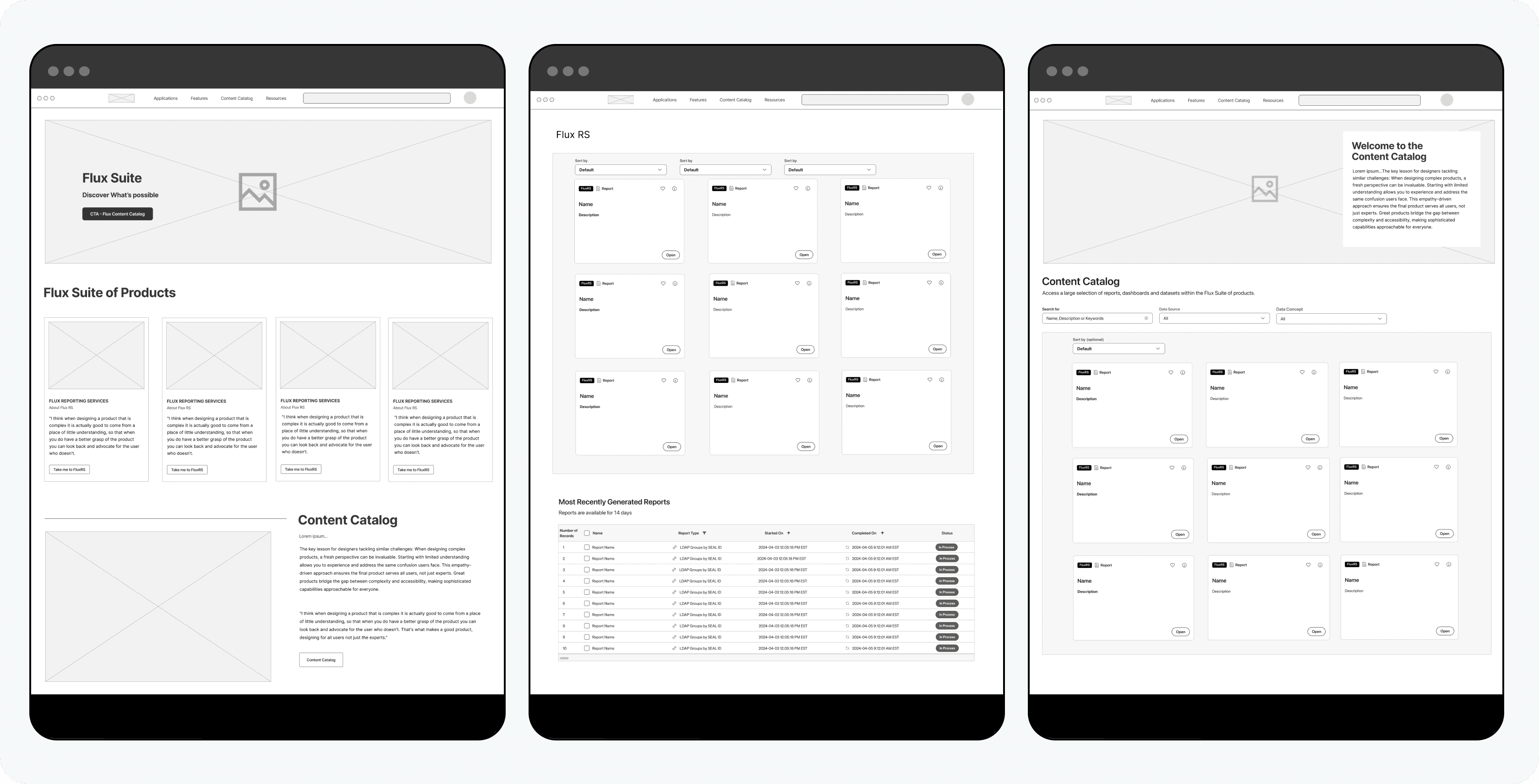
Flux wireframes
Impact
I explored two directions: a chart-rich layout and a minimalist one. I went for simplicity because financial data needs precision and quick scanning. The clean layout made key insights easier to understand and improved trust in the tool, especially important at a time when customers were resigning and product retention was decreasing.
Choosing clarity over complexity
Design decisions
Impact
Increased retention
Dashboard became central, engagement rose, and support tickets fell significantly.
Increased efficiency
It cut design time from weeks to days, letting the team test, refine, and deliver faster.
Impact
Increased retention
Dashboard became central, engagement rose, and support tickets fell significantly.
Increased efficiency
It cut design time from weeks to days, letting the team test, refine, and deliver faster.